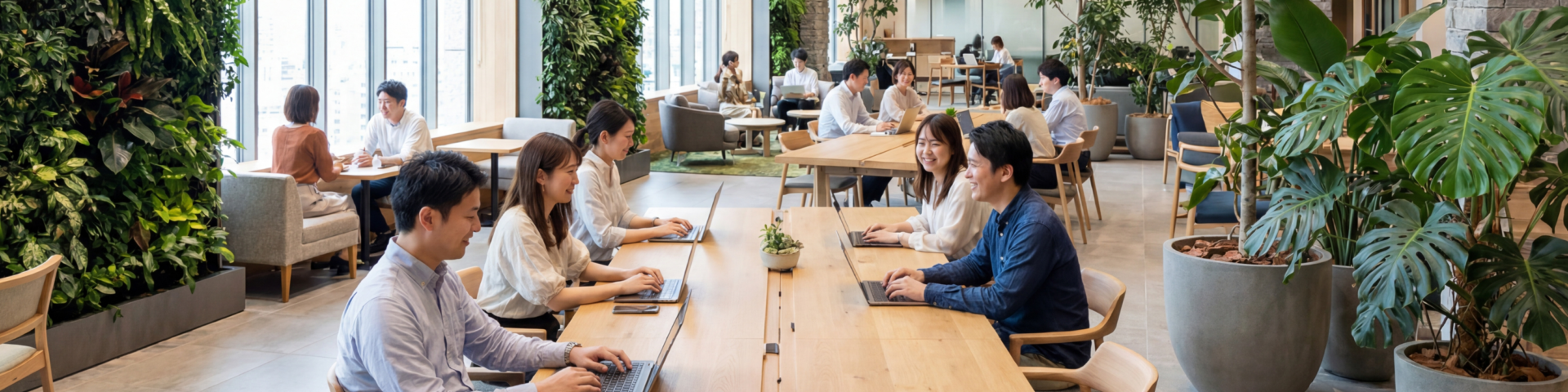
Creating a sustainable workplace is so much more than a box-ticking exercise – it’s about building a business that makes sense: less waste, lower costs and a more engaged workforce. 75% of professionals believe an organisation’s commitment to sustainability is important when considering a new role, so building a sustainable workplace is one of the smartest moves you can make for your business.
At Career Moves, we are dedicated to sustainability, diversity, and social impact. Our B Corp™ certification reflects our commitment to building a better, more inclusive, and more sustainable world through ethical recruitment practices.
If you’re a business owner wondering where to start, or you’re already on the journey and want to scale, this guide walks you through the exact steps we’ve seen work across industries.
Table of Contents
What Does a Sustainable Workplace Actually Mean?
Many business owners think “sustainable workplace” means recycling, turning off lights, and maybe a water bottle station. Those things help, but they’re not the whole picture.
A sustainable workplace is a commitment to how you operate every single day. It’s about building a business that meets your needs today without compromising the people, resources, or planet’s ability to thrive tomorrow.
It’s the most practical business decision you can make.
Beyond Recycling Bins: The Real Definition
Most companies start with recycling programs because they’re visible and easy. But real sustainability means integrating three dimensions into how you operate:
- Environmental responsibility (energy, waste, resources)
- Social responsibility (how you treat people, community impact)
- Economic viability (whether your practices actually save money and create business value).
According to ESG (Environmental, Social, Governance) frameworks (the standard most investors and partners now use), a sustainable workplace addresses all three.
Three Pillars Every Business Owner Should Know
Environmental Impact
This is what most people think of first: energy consumption, waste streams, carbon footprint, water usage, supply chain practices. The good news? Environmental improvements almost always save money. For example, an energy audit typically identifies 20-30% in untapped savings (depending on business and sector).
Social Impact
This is where most businesses under-deliver, but where you’ll see the fastest, most visible results. When people feel valued and purposeful, they stay, and they perform better. Social sustainability means your team has safe, healthy, purposeful working conditions. It means DEI practices are followed, and employees understand how their work connects to something bigger. Companies with strong social practices see higher employee retention and attract higher-calibre talent.
Economic Viability
A proper sustainability strategy typically breaks even within 18-24 months, then delivers ongoing savings. Here’s what we’ve learned from placing talent across hundreds of companies: The businesses that win long-term are the ones integrating all three sustainability pillars. They understand that sustainable workplaces are profitable workplaces.
7 Steps to Create a Sustainable Workplace
The following seven steps towards building a sustainable workplace are what we’ve seen work across industries, from small startups to established enterprises. They’re practical, and they’re designed so you can start immediately. You don’t need permission from corporate. You don’t need a massive budget. You just need a decision to start.
Step 1: Assess Your Current Position
Before you can move forward, you need to know where you’re starting. Spend a week or two understanding your baseline: What’s your current energy consumption (check your utility bills)? What waste streams exist? Are you already working remotely, or is it a hybrid work environment? What does your supply chain look like? Who in your team cares about this enough to volunteer?
You’re building a one-page “sustainability baseline” that answers the questions: Where are we now? What’s working? What’s broken? Which quick wins are obvious?
This fact-gathering step takes 1-2 weeks and costs nothing. Once you have the details, everything else becomes easier because you’re working from real facts and not assumptions.
Step 2: Set Clear, Measurable Targets
Here’s where most companies stumble: vague goals. “Be more green” isn’t a target. “Reduce waste by 30% in 12 months” is.
Based on your baseline, identify 2-3 priority areas- maybe it’s energy efficiency, waste, or building a green team and culture shift. Pick what matters most to your business and where you can realistically see progress.
For each priority, set a SMART target:
- Specific: What exactly are we improving?
- Measurable: How will we know if we succeeded?
- Achievable: Is this realistic given our resources?
- Relevant: Does this align with our business and values?
- Time-bound: When will we achieve it?
Write these down, assign someone to be accountable, and share them with your team.
Step 3: Implement Energy & Resource Efficiency
Energy is usually the biggest expense and the biggest opportunity. According to Harvard’s Sustainable Office Guide, making informed purchasing decisions and implementing energy efficiency measures delivers fast, measurable savings.
Quick wins (start immediately):
- Switch to LED lighting (recovers cost in 2-3 years through savings)
- Install motion sensors in low-traffic areas
- Adjust thermostat settings (a 1-2 degree change can save 5-10% of heating/cooling costs)
- Conduct an energy audit (many suppliers offer this for free)
Medium-term moves (next 3-6 months):
- Switch to a green energy provider or explore renewable options (solar, wind)
- Optimise HVAC systems for efficiency
- Upgrade old equipment to ENERGY STAR-certified models
- Implement a hybrid/remote working policy (smaller office footprint = lower energy use)
Resource efficiency extends beyond energy:
- Water: Install low-flow fixtures in bathrooms, fix leaks immediately
- Paper: Shift to digital-first processes, print double-sided only
- Packaging: Reduce single-use items, switch to reusable alternatives
Most companies cut energy bills by 20-30% within the first year through efficiency alone. Efficiency upgrades typically pay for themselves within 18-24 months and deliver pure savings thereafter. Start with the quick wins. Build momentum. Use savings to fund bigger investments.
Step 4: Build a Zero-Waste Program
Waste reduction is visible and measurable, and employees can participate in it daily. It helps to build a sustainable workplace culture.
Most companies have recycling bins, but few do it well. Make it easy for everyone with clearly labelled bins in convenient spots, simple signage, and regular emptying.
Expand Beyond Recycling:
- Composting: Organic waste (food, paper) is often the largest waste stream. A composting program can immediately divert 20-30% of office waste.
- Eliminate single-use items: Provide reusable alternatives (water bottles, cups, cutlery). Make them convenient enough that using them is easier than using disposables.
- Go digital: Document management systems, digital signatures, cloud storage = less paper, less printing.
- Procurement strategy: When buying office supplies, furniture, or equipment, prioritise items made from recycled or sustainable materials.
According to WWF’s workplace sustainability guide, a comprehensive zero-waste program that combines recycling, composting, and reduced purchasing can divert 40-50% of office waste from landfills while cutting waste disposal costs by 30-40%.
Step 5: Create a Workplace Culture Around Sustainability
This is where sustainability becomes part of who you are as a company.
- Form a Green Team – Recruit 5-7 volunteers from different departments. Include at least one leader (signals commitment from the top). Their job is to brainstorm ideas, implement initiatives, communicate progress, and (most importantly) keep momentum.
- Communicate Transparently Monthly Updates – “Here’s what we achieved. Here’s our impact. Here’s what’s next.” Transparency builds credibility. Progress reports (energy saved, waste diverted, money saved, trees protected) make impact tangible.
- Tie Sustainability to Company Values – Sustainability shouldn’t exist in isolation. Weave it into your mission, your hiring criteria, your performance reviews and your decision-making. Celebrate wins and involve the whole team.
Teams with genuine purpose and values alignment attract and retain better talent. People want to work somewhere that means something, and a visible, authentic sustainability culture becomes part of your employer brand.
Step 6: Measure, Monitor & Communicate Progress
Here are the metrics that matter when creating a more sustainable workplace:
Environmental Impact:
- Carbon footprint (tons CO2 equivalent/year)
- Energy consumption (kWh/month, cost trend)
- Waste diversion rate (% of waste diverted from landfill)
- Water usage (litres per employee)
Operational Impact:
- Cost savings from efficiency (monthly utility bill reduction)
- Waste disposal cost reduction
- ROI on sustainability investments
- Supply chain sustainability score
People Impact:
- Employee engagement scores
- Retention rate (especially post-sustainability rollout)
- Recruitment metrics (time-to-hire, candidate quality)
- Green Team volunteer participation rate
Business Impact:
- Employer brand perception (Google reviews, online ratings)
- New business wins influenced by sustainability
- Media mentions or industry recognition
How to Track It:
- Baseline audit (establish month 1 numbers)
- Monthly data collection (automate where possible: energy bills, waste reports)
- Quarterly internal dashboard (share progress with team)
- Annual sustainability report (external communication)
When employees see “Our team diverted 40 tons of waste from landfill this quarter, protecting 200 trees,” they feel the impact. When they see “Energy efficiency saved us £8,400 this year,” they understand the business value. Don’t hide shortcomings either, transparency builds trust.

Step 7: Partner with Aligned Suppliers & Community
Your supply chain often represents your largest environmental footprint. Who you partner with reflects your values as a business. Candidates research where their company sources from and ask about supply chain practices. Ethical, sustainable sourcing is increasingly a hiring factor.
Start by understanding:
- Who do we buy from?
- What are their sustainability practices?
- Are there better alternatives?
This doesn’t mean switching everything overnight. It means being intentional. For new purchases or contracts, prioritise suppliers with credible sustainability credentials: certifications (Fairtrade, RSPO, FSC, Organic), transparent practices, aligned values.
Real sustainability is verified by B Corp certification, ISO standards, industry-specific certifications, and independent audits.

Sustainability & Talent: Why This Matters More Than You Think
The companies winning at recruitment right now are the ones who understand that a commitment to a sustainable workplace attracts a different kind of candidate – the kind who stays, performs, and becomes your best advocate.
We’ve placed over 6,000 candidates in the past decade. The pattern is unmistakable: candidates increasingly filter employers by values before they filter by salary.
Attracting High-Calibre Candidates
The talent market has shifted. When Workhuman studied workplace sustainability, they found that 83% of millennials reported higher loyalty to companies with green practices. When you mention sustainability in your job posting (and we mean genuine sustainability, not greenwashing!), you attract candidates who want to work for a values-aligned company.
Reducing Turnover Through Values Alignment
Replacing an employee can not only causes disruption, loss of productivity, and the loss of institutional knowledge when they leave, but also costs roughly 50% to 200% of that employee’s annual salary.
Research consistently shows that employees aligned with company values have dramatically higher retention. Companies with strong sustainability practices have an average 21% higher employee retention rate. That’s significant.

Building Your Employer Brand Around Sustainability
Your employer brand is your reputation as a place to work. It’s what people say about you and what influences whether top talent applies or passes. Sustainability can become a core part of your employer brand story – but only if it’s authentic.
For example, if two companies offer similar roles and pay, the one with a genuine, visible commitment to sustainability (with proof) wins. It’s a market differentiator with real recruitment impact.
What Candidates Actually Look For
- Transparency: “Here’s where we are, here’s where we’re going”
- Authenticity: Genuine effort, not perfect, showing real challenges
- Progress: “We’ve done X. Here’s what’s next.”
- Participation: Employees clearly involved, not just leadership mandated
- Impact: Measurable results, not vague claims
We work with companies across industries. The ones attracting top talent almost always have a strong values story. Sustainability is often a central part of that. Not because it’s trendy, but because it signals integrity.
Common Obstacles (And How to Overcome Them)
We’ve heard every objection: budget constraints, company size, employee resistance… They’re all very real concerns. The companies that actually build sustainable workplaces start with what they have and build on that. Let’s address the three we hear most:
“Sustainability Initiatives Are Too Expensive”
The Reality: Many improvements have faster ROI than you think. A company spending £2,000/month on utilities could save £400-600/month (£4,800-7,200 annually) just through behavioural changes and basic efficiency upgrades. Start there. Use savings to fund bigger investments.
“We’re Too Small to Make a Real Impact”
The Reality: Small companies often have more agility than large enterprises. You’re also more nimble – implementing new practices doesn’t require committee approval and 18-month rollouts. More importantly, a sustainable small business attracts quality talent that might otherwise go to larger competitors. Your size isn’t a limitation – it’s your edge. Use it.
“Employee Buy-In Is Hard to Achieve”
The Reality: Buy-in fails when sustainability feels imposed from above. It works when employees feel heard. Ask for ideas and implement what employees suggest (even the small things). Celebrate progress visibly and publicly. When people feel like they’re part of the solution rather than subjects of a corporate initiative, buy-in follows naturally.

Real Results: What Sustainable Workplaces Actually Achieve
This is where theory becomes practice. We’ve talked about what sustainable workplaces are and how to build them. Now let’s look at what actually happens when companies commit to it. The benefits extend far beyond environmental feel-good stories.
- 89% of companies with high ESG ratings outperform market average
- Companies with strong sustainability see 22–55% lower turnover
- Sustainable offices reduce costs by average 20-30% (energy, waste)
- Job seekers now rank company values alongside salary in decision-making
Companies that prioritise sustainability outperform competitors. The talent market has shifted fundamentally, and job seekers now rank company values alongside salary when making decisions. This wasn’t true five years ago. Now it’s standard. Candidates with options choose employers aligned with their values. Companies without a values story lose out on top talent.
Beyond Metrics: The Cultural Shift
When companies genuinely commit to sustainability, something shifts internally that metrics don’t fully capture. Employees report higher engagement and a stronger sense of purpose. People want their work to mean something. Sustainability provides that.
A sustainability mindset encourages creative problem-solving. Instead of “this is how we’ve always done it,” teams ask “how can we do this more efficiently, more responsibly?” That innovative thinking becomes embedded in culture. It shows up in product development, process improvement, customer relationships – everywhere. Companies report that once sustainability thinking takes hold, it spreads.
Top talent increasingly seeks companies with visible values and commitment to impact. You’re attracting people who want to work with purpose, not just for paychecks. That changes the quality of your hiring pool fundamentally.
The real result of sustainability isn’t just a lower carbon footprint or reduced utility bills. It’s a shift in how your company operates. You become more efficient, more collaborative, more innovative, and more attractive to talent.

Career Moves’ Perspective: Why We Care About Workplace Sustainability
We don’t talk about workplace sustainability from theory. We live it. For 35 years, we’ve built our business on a simple belief: the most powerful assets to any business are an engaged workforce, a culture that thrives on its values, and an employer brand that stands the test of time. Sustainability—genuine sustainability—is how you create all three.
We Practice What We Preach
CMG is B Corp certified. That’s not a badge we display lightly. B Corp certification means independent auditors have verified that we meet high standards for environmental responsibility, employee treatment, community impact, and overall social and environmental performance. We report our impact publicly. We’re held accountable annually. It’s a commitment we renew every year because we believe in walking the walk.
Our recruitment practices reflect this, and we partner with businesses that share our commitment to environmental and social responsibility. Our commitment to sustainability extends directly to the teams we build for our clients. We understand firsthand how a values-driven culture attracts talent, improves retention, and creates a competitive advantage.
A Partnership Approach
We take the time to get to know our candidates’ backgrounds and our clients’ businesses to build long-lasting partnerships. That’s our core philosophy, and it’s exactly why sustainability matters in recruitment.
Your sustainability journey isn’t something you should navigate alone. It’s a cultural shift that requires alignment across leadership, operations, hiring, and the team. Building a sustainable workplace requires the right people who align with your values.
When you work with us, we understand your sustainability commitment and what “your kind of person” actually looks like. We assess whether candidates will thrive in your values environment, not just perform the job. We’ve placed over 6,399 candidates in the past decade with a 100% success rate on retained assignments – that means our partnerships last because we build them on genuine alignment, not just job fit.
Ready to build a sustainable workplace?
Building a sustainable workplace culture requires the right people who are aligned with your values and committed to your mission. That’s where Career Moves come in.
Whether you’re just starting to think about sustainability or you’re ready to scale existing efforts, partnership makes the difference. Contact our team to discuss how we can help you build both your sustainability strategy and the team that brings it to life. Let’s create workplaces where people thrive, and businesses succeed.
Frequently Asked Questions
What’s the Difference Between Greenwashing and a Real Sustainable Workplace?
Greenwashing claims sustainability without substance. Real sustainability has measurable targets, transparent reporting, third-party validation, and actual operational changes. If a company’s marketing talks about being “green” but you can’t find specific metrics, timelines, or independent verification, that’s likely greenwashing.
How Do I Measure Sustainable Workplace Success?
Track metrics that matter: energy consumption and cost savings, waste diversion rate (what percentage is recycled/composted), carbon footprint, employee retention rates, recruitment quality improvements, and employer brand perception.
Can a Small Business Afford a Sustainable Workplace?
Yes. Many sustainability improvements have zero upfront cost (e.g., recycling programs, energy audits) or pay for themselves within a few months. Most small businesses see 20-30% reduction in utility bills within the first year, which funds larger investments
How Long Does It Take to Build a Sustainable Workplace?
Quick wins take 1-2 weeks. Visible culture shift takes 2-3 months. Real operational change takes 6-12 months. Full sustainability maturity (systems, culture, measurement, community impact) takes 12-24 months. The key is starting immediately with what you have.
What’s the Connection Between Workplace Sustainability and Employee Retention?
Employees aligned with company values stay 21% longer on average. Sustainability signals purpose and long-term thinking, which attracts and retains purpose-driven talent. When people feel their work means something and their employer’s values align with theirs, they’re more engaged and less likely to leave.
Do I Need B Corp Certification for a Sustainable Workplace?
No, but it helps. B Corp certification provides third-party credibility and annual accountability, which is valuable if your market cares about verified sustainability. However, transparent annual sustainability reporting, ISO certification, or other industry standards can work equally well.
What’s a Quick Win for Creating a Sustainable Workplace?
Implement recycling with clear signage, conduct an energy audit, form a green team, or switch to a sustainable office supply vendor. These can happen within 2-4 weeks and cost nothing or minimal amounts.
How Does a Sustainable Workplace Attract Better Job Candidates?
Candidates increasingly research company sustainability before applying. When you mention genuine sustainable practices in job descriptions and during interviews, you attract purpose-driven talent. These candidates stay longer, perform better, and fit culture more naturally.
Is a Sustainable Workplace Important for Recruitment?
Absolutely. Eighty-three per cent of millennials report higher loyalty to sustainable companies. A visible, authentic sustainability commitment becomes part of your employer brand and recruitment narrative.
How to Make a Workplace More Sustainable?
Start with assessment: understand your current energy, waste, and operations. Set clear, measurable targets. Build culture through communication and employee participation. Measure progress and adjust.
What Are the 5 Ps of Sustainability?
While sustainability frameworks vary, the most common approach focuses on: People (employee wellbeing, fair practices), Planet (environmental impact, resource use), Profit (economic viability, cost efficiency), Purpose (meaningful work, values alignment), and Partnership (aligned suppliers, community engagement). These five dimensions ensure sustainability is a holistic business strategy.